Quartz varieties keep their own chapters. Inclusions, optical effects, growth habits and quartz-rich rocks are different kinds of descriptions.
Keep each chapter’s scientific identity: a family, species, variety, trade label, rock and fossil are different kinds of names.
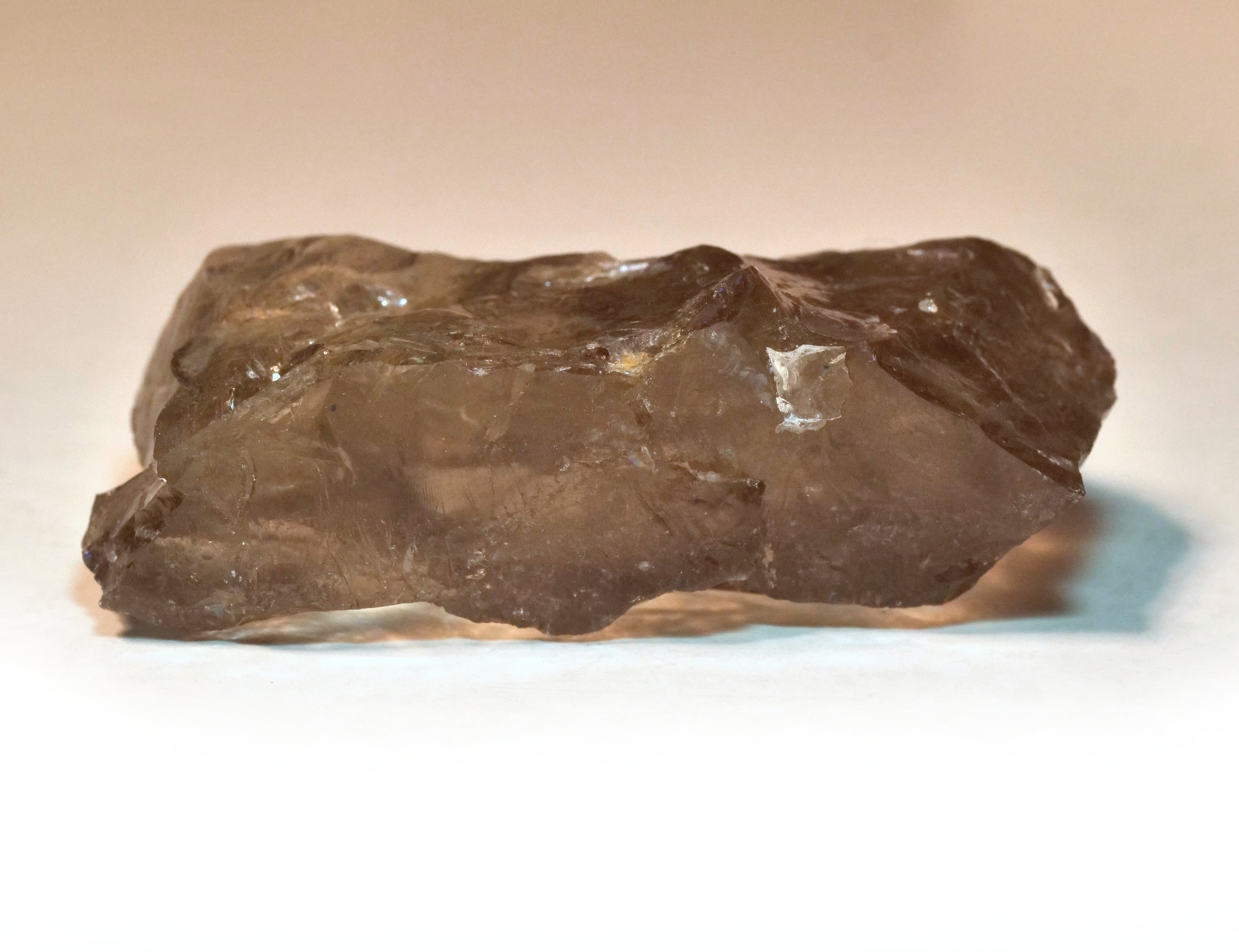
Smoky quartz ↗
Mineral variety
A gray-to-brown variety of quartz, with a palette that can feel almost transparent in one piece and deeply smoky in another. Rough, cut and polished examples reveal very different sides of the same mineral.
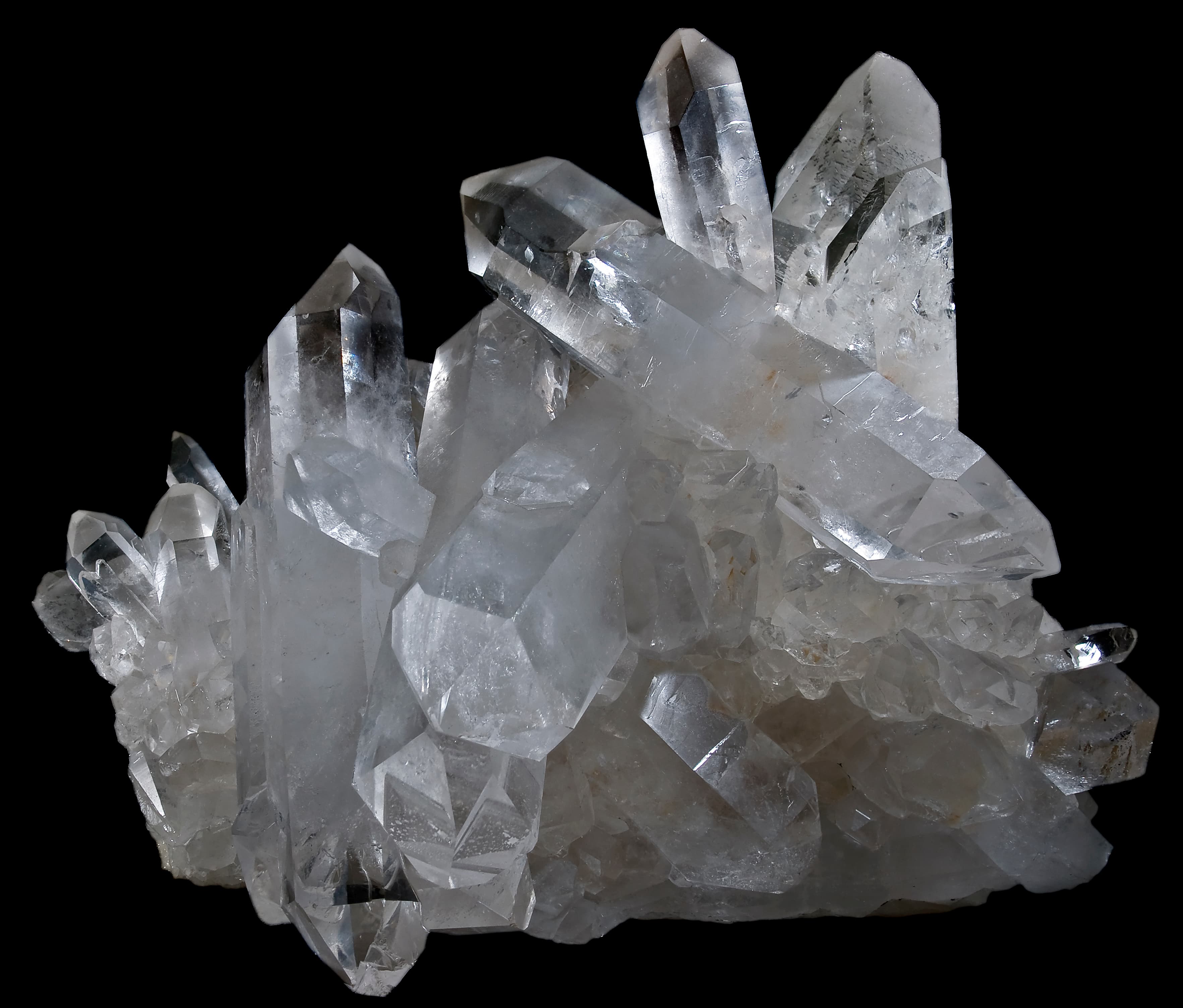
Ljeto · CC BY 4.0 · Display cropQuartz · clear quartz ↗
Mineral species / featured variety
Clear, colorless quartz is often called rock crystal. It offers an approachable way to notice natural crystal faces, internal inclusions and the difference between a grown surface and a polished one.
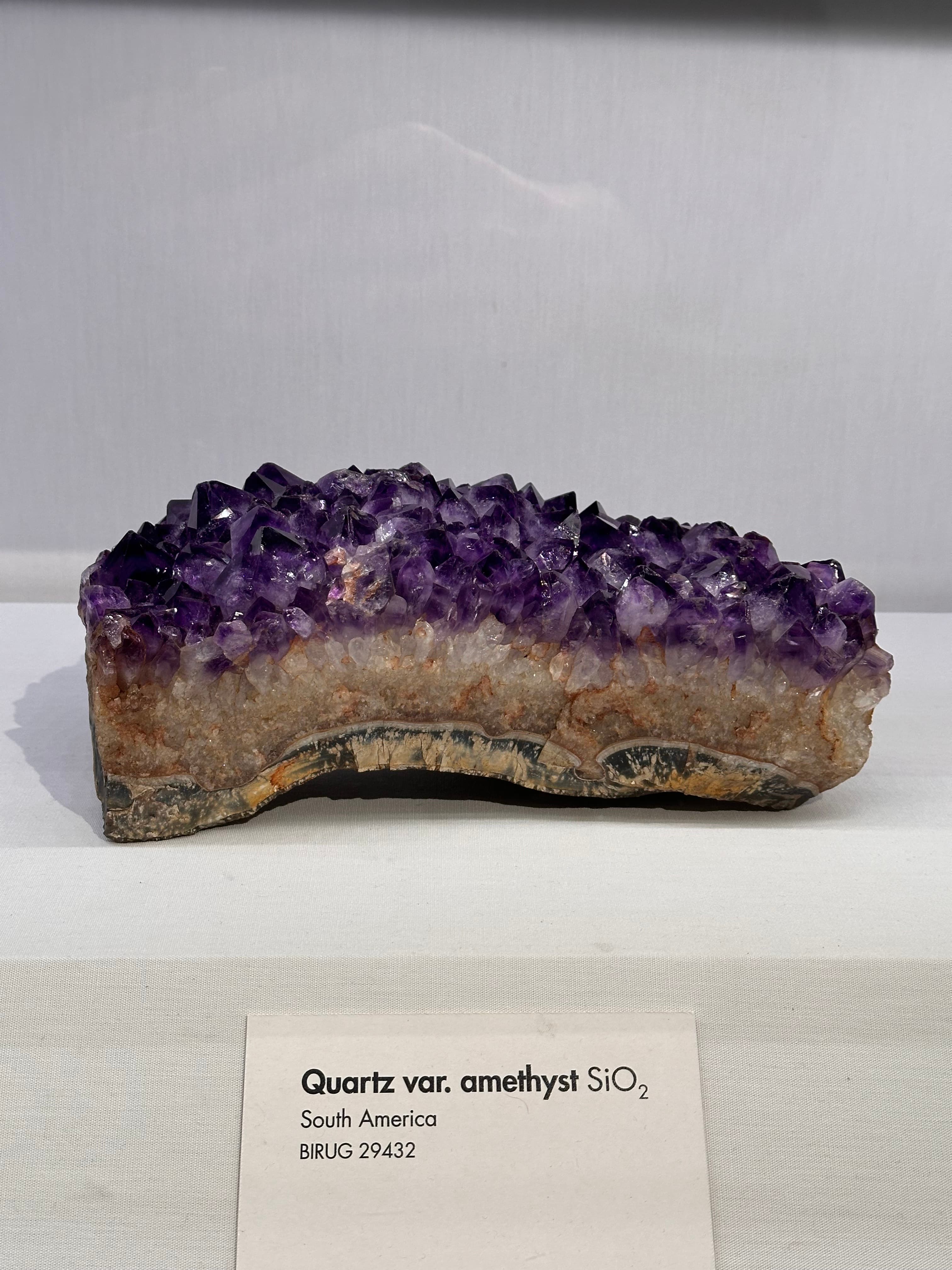
Didier Descouens · CC BY-SA 4.0 · Display cropAmethyst ↗
Mineral variety
Amethyst brings purple color to the quartz family, from delicate lavender to stronger violet. It can appear as an individual crystal, a sparkling lining inside a cavity or a carefully cut gemstone.
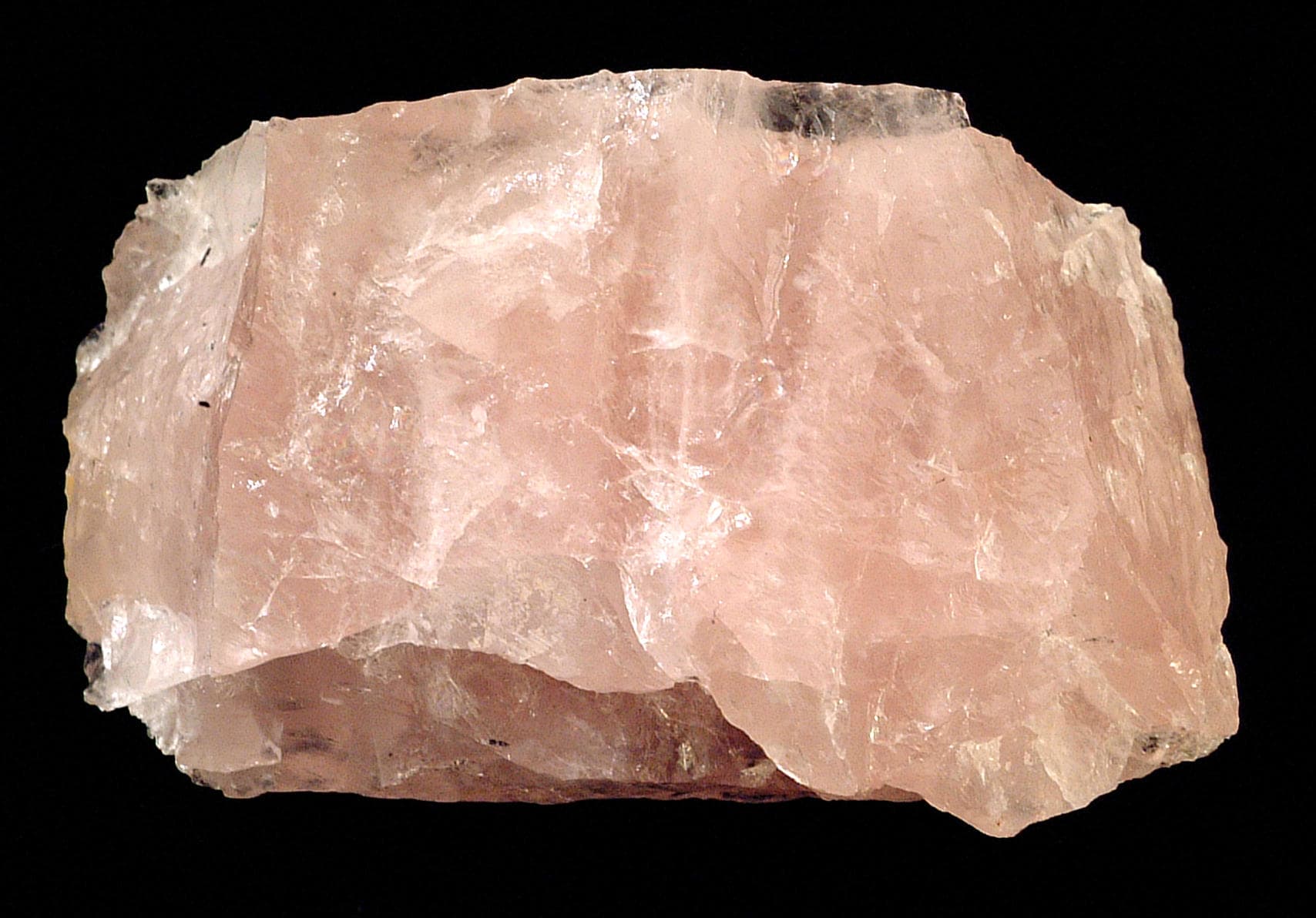
TomWG00 · CC0 · Display cropRose quartz ↗
Mineral variety
Rose quartz is the pink variety of quartz, commonly with a softly cloudy, translucent appearance. It is often encountered as a rounded bead, a carving or a substantial piece of rough rather than a sharply formed crystal.
Darla Sondrol · CC0 · Display cropCitrine ↗
Mineral variety
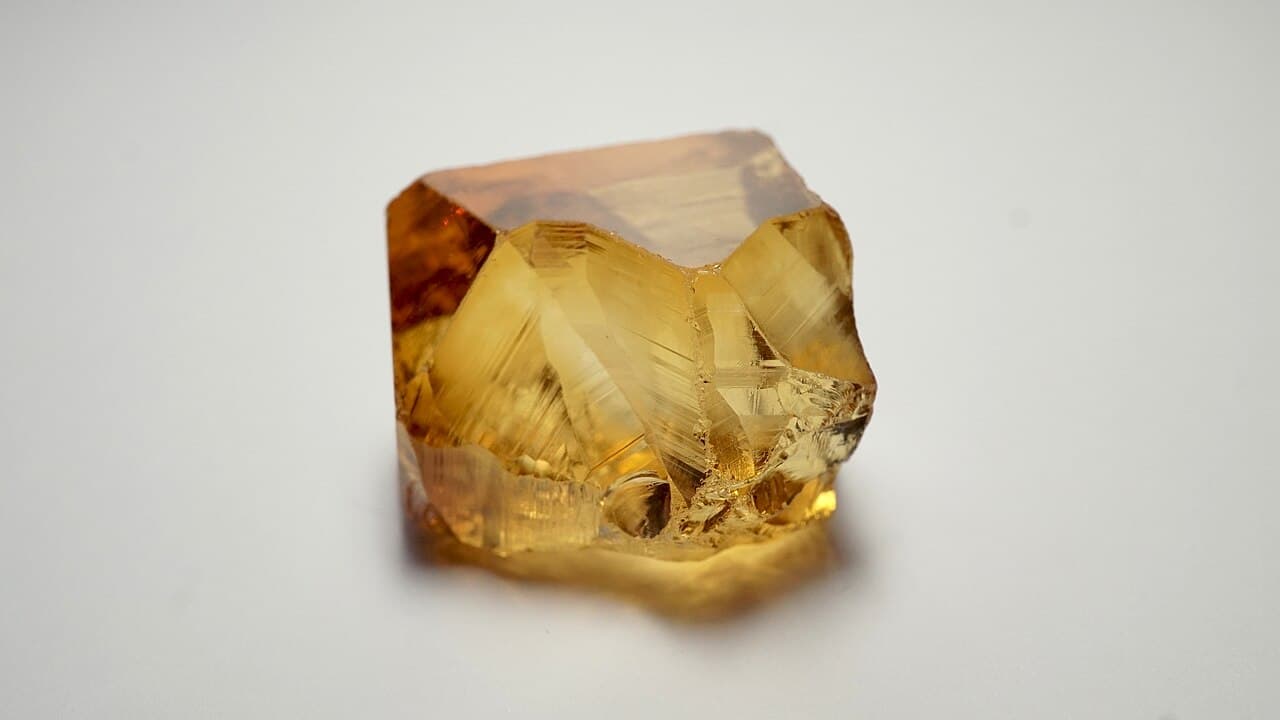
Citrine is yellow-to-orange quartz, often transparent enough to cut into bright facets. Its warm palette can be pale and quiet or more saturated, but color alone does not tell the story of how it was produced.
Paweł Maliszczak [hardleo.com] · CC BY-SA 4.0 · Display cropTiger’s eye ↗
Gem material
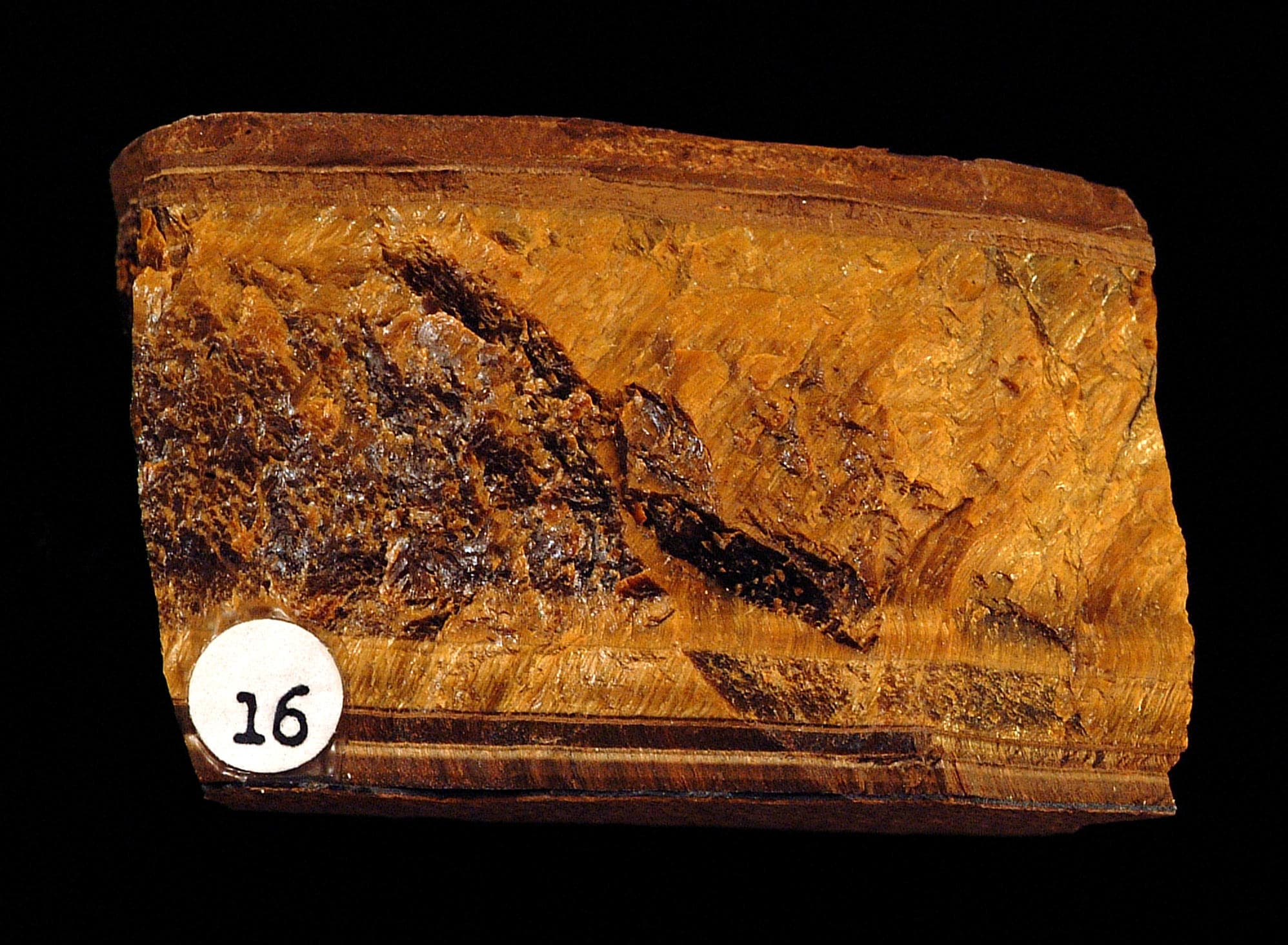
Tiger’s eye is best known for a silky band of light that shifts as you turn the polished surface. Golden and brown stripes make its texture especially easy to notice in beads and domed cabochons.
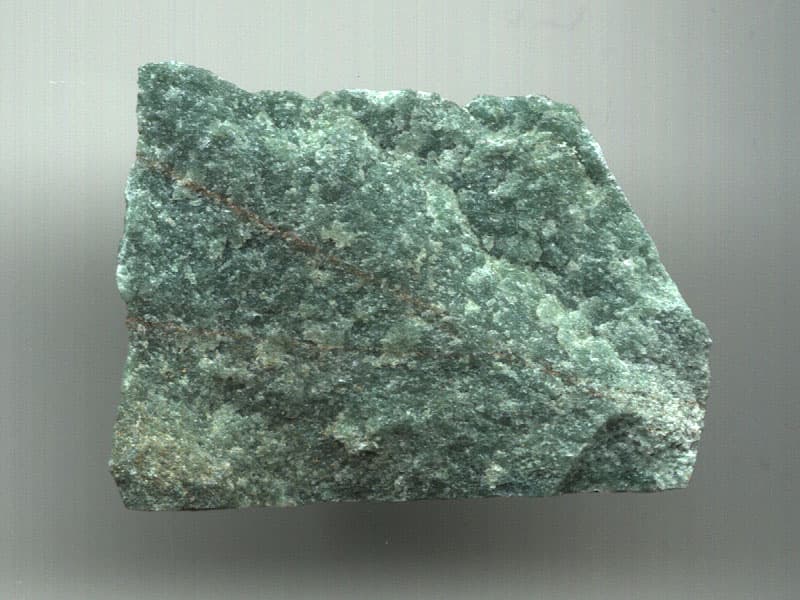
Darla Sondrol · CC0 · Display cropGreen aventurine ↗
Rock / aggregate
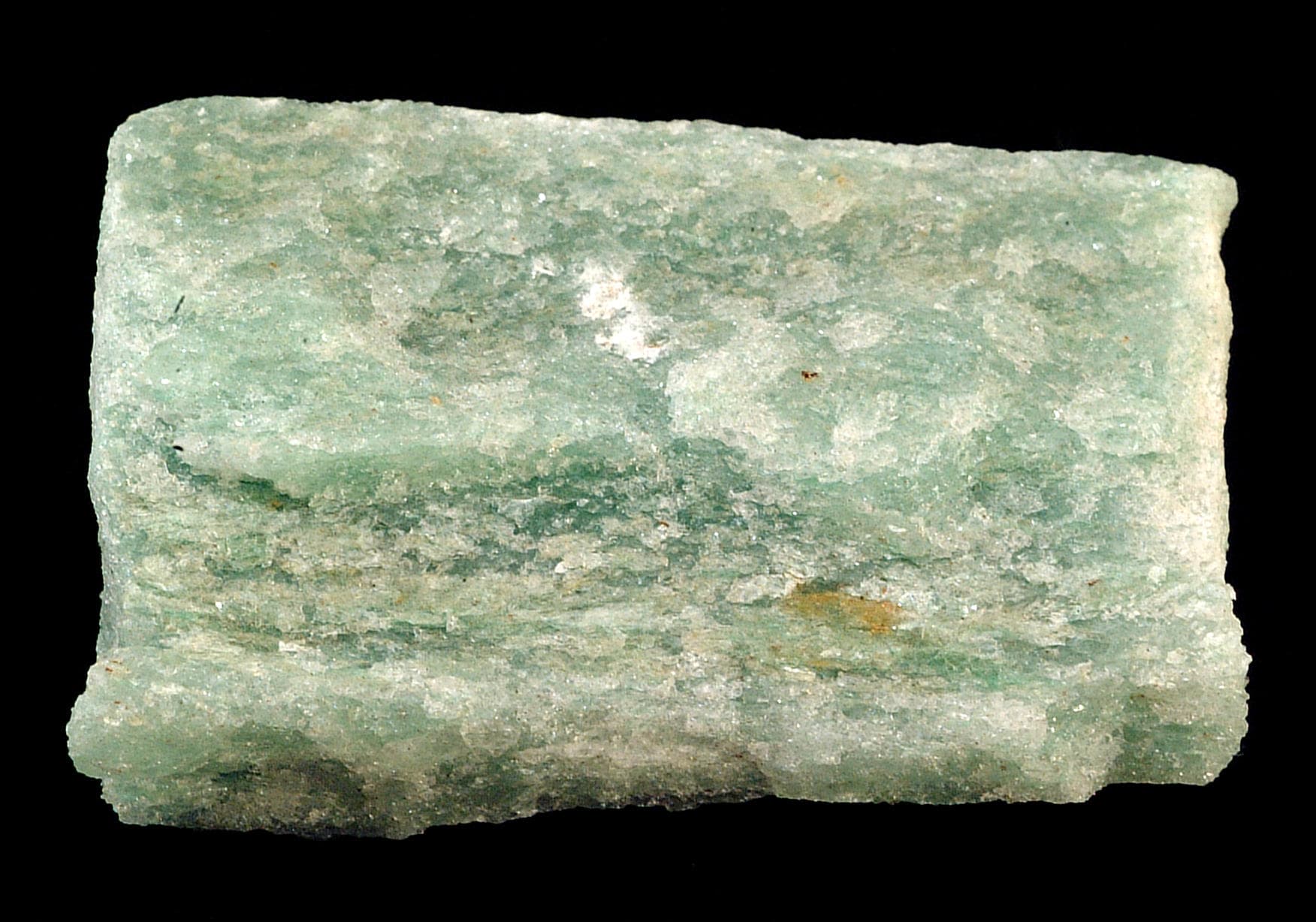
Green aventurine is a quartz-rich material containing tiny reflective inclusions. Turn a polished piece gently and its soft green surface may reveal scattered points of sparkle rather than a single moving stripe.
Darla Sondrol · CC0 · Display cropPrasiolite ↗
Mineral variety
Prasiolite is pale green quartz, often very lightly colored in a thin or small cut gem. It offers another way to explore how familiar quartz can be described by a gem variety name.
John Collins · CC0 · Display cropRutilated quartz ↗
Gem material
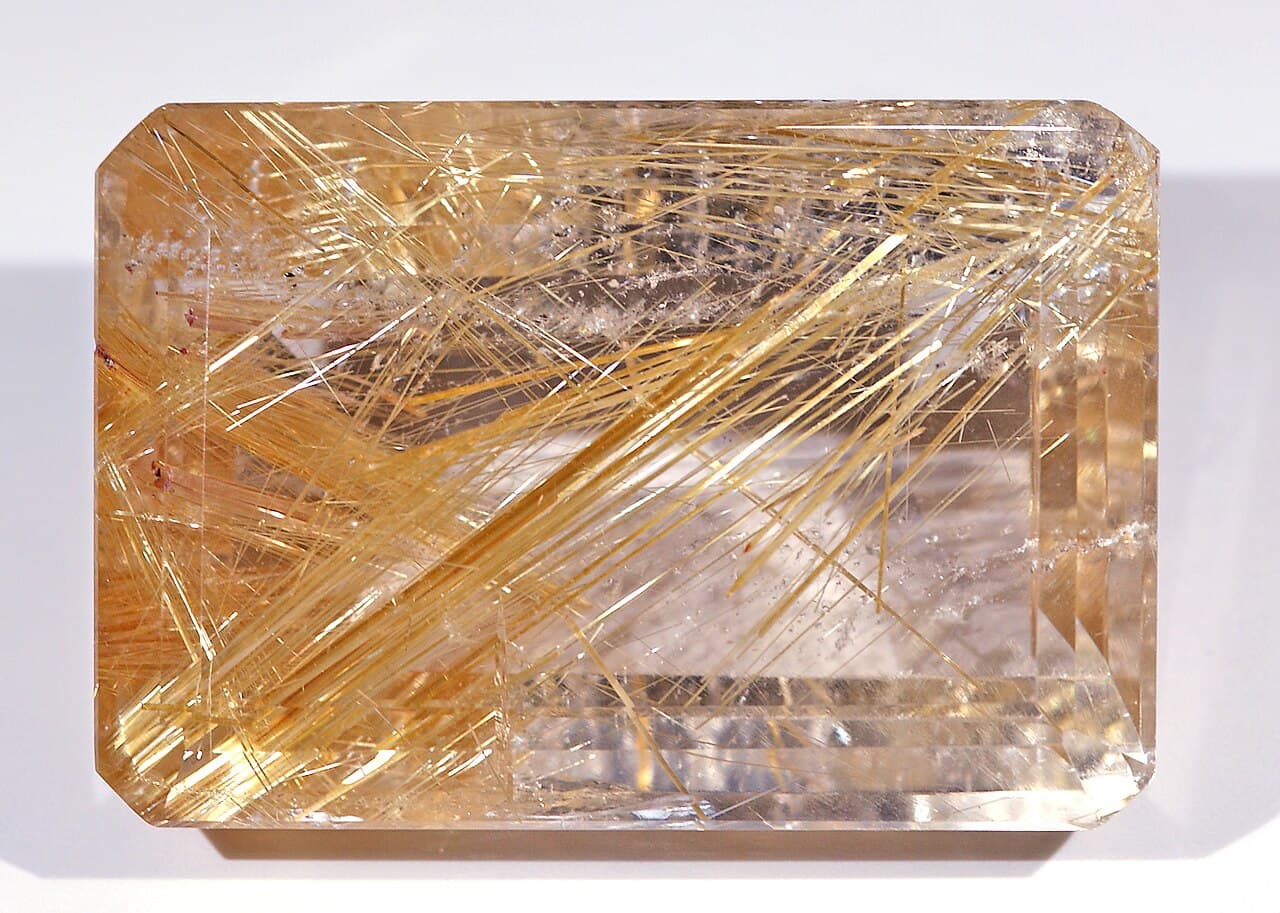
Rutilated quartz encloses slender rutile crystals within quartz. Fine gold-colored needles can cross clear areas, making the inclusions the focus rather than something a cutter tries to hide.
Didier Descouens · CC BY-SA 3.0 · Display cropAmetrine ↗
Mineral variety
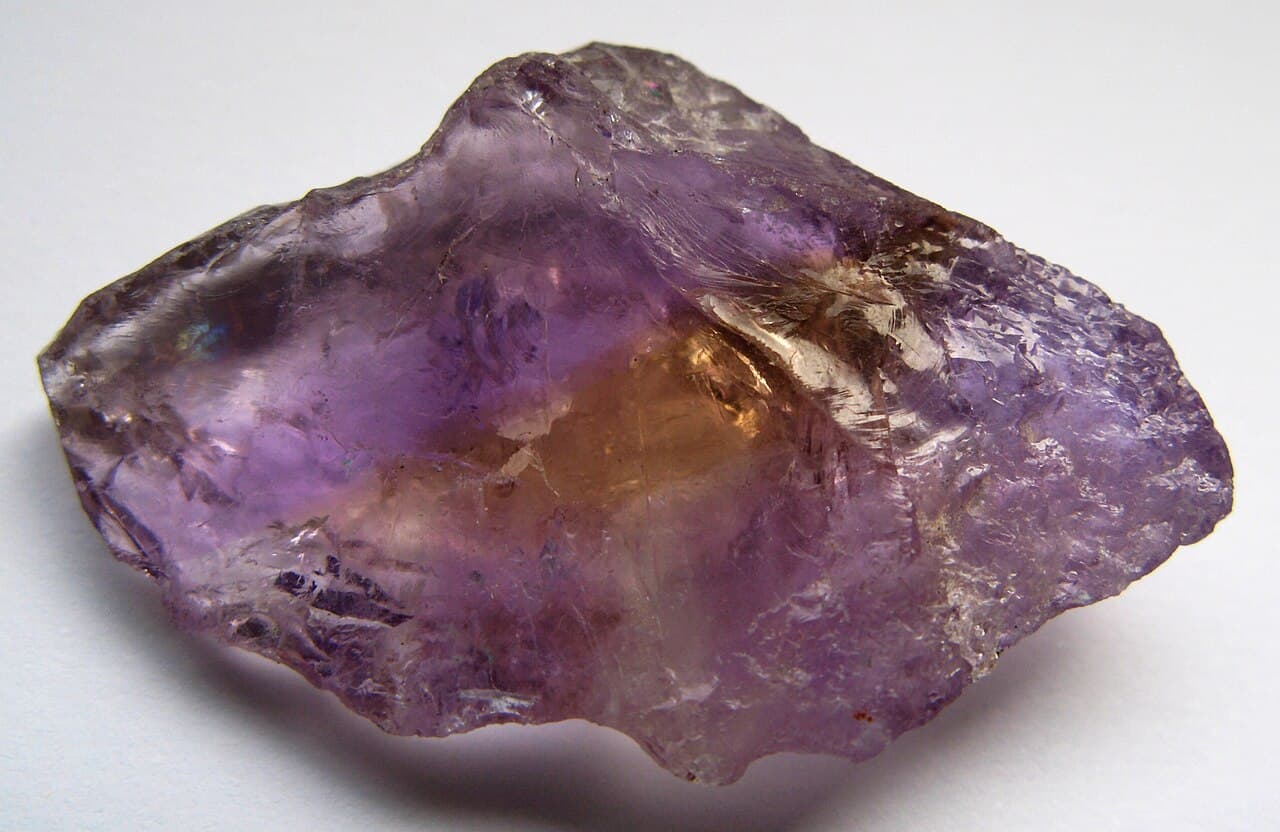
Ametrine combines purple and yellow zones within quartz. A cutter can frame those contrasting areas into a single gem rather than blending them into one uniform shade.
Ra'ike (see also: de:Benutzer:Ra'ike) · CC BY-SA 3.0 · Display cropHawk’s eye ↗
Gem material
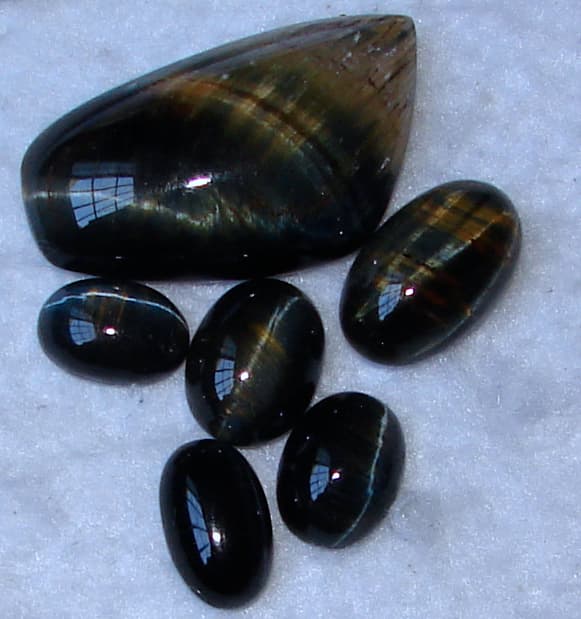
Hawk’s eye is a blue-gray chatoyant quartz-rich gem material related to tiger’s eye. Its moving reflection comes from a strongly directional fibrous texture.
Eurico Zimbres Zimbres · CC BY-SA 3.0 · Display cropPhantom quartz ↗
Growth feature in quartz
An internal outline can record an earlier growth surface. Chlorite or other inclusions may accent it, but not every green inclusion is chlorite. A phantom is a growth feature, not a new species.
Didier Descouens · CC BY-SA 4.0 · Display cropGarden quartz ↗
Included quartz / trade name
Landscape-like inclusions inspire this trade label. Garden quartz need not contain a phantom, and a phantom need not have a garden-like scene. Identify inclusion minerals analytically rather than from appearance.
Didier Descouens · CC BY-SA 4.0 · Display cropTourmalinated quartz ↗
Quartz with tourmaline inclusions
The host is quartz and the dark inclusions are described as tourmaline. Needle shape or black color alone is not enough to identify each inclusion; rutile-bearing quartz is a different description.
Didier Descouens · CC BY-SA 4.0 · Display cropStrawberry quartz ↗
Included quartz / variable trade name
This loosely applied name usually concerns pink-red quartz with visible inclusions. It is not the same identity as rose quartz; quartzite and glass can also be sold under similar names. Ask what was actually identified.
Didier Descouens · CC BY-SA 4.0 · Display cropSuper Seven ↗
Included quartz / marketing name
A marketing label does not prove seven mineral phases. Amethyst and smoky quartz are quartz color varieties, not separate species; any claimed inclusion assemblage needs sample-specific identification.
Didier Descouens · CC BY-SA 4.0 · Display cropRabbit hair quartz ↗
Included quartz / appearance label
Fine hair-like inclusions create the description. Their chemistry is not fixed by the trade name. GIA has studied differently colored examples; avoid calling every needle rutile or assuming one universal cause.
Didier Descouens · CC BY-SA 4.0 · Display cropHerkimer diamond ↗
Locality / habit name for quartz
These double-terminated quartz crystals are not diamonds. Reserve a New York locality claim for documented material; a similarly shaped quartz from elsewhere is not proof of Herkimer provenance.
Didier Descouens · CC BY-SA 4.0 · Display cropPietersite ↗
Quartz-rich chatoyant aggregate
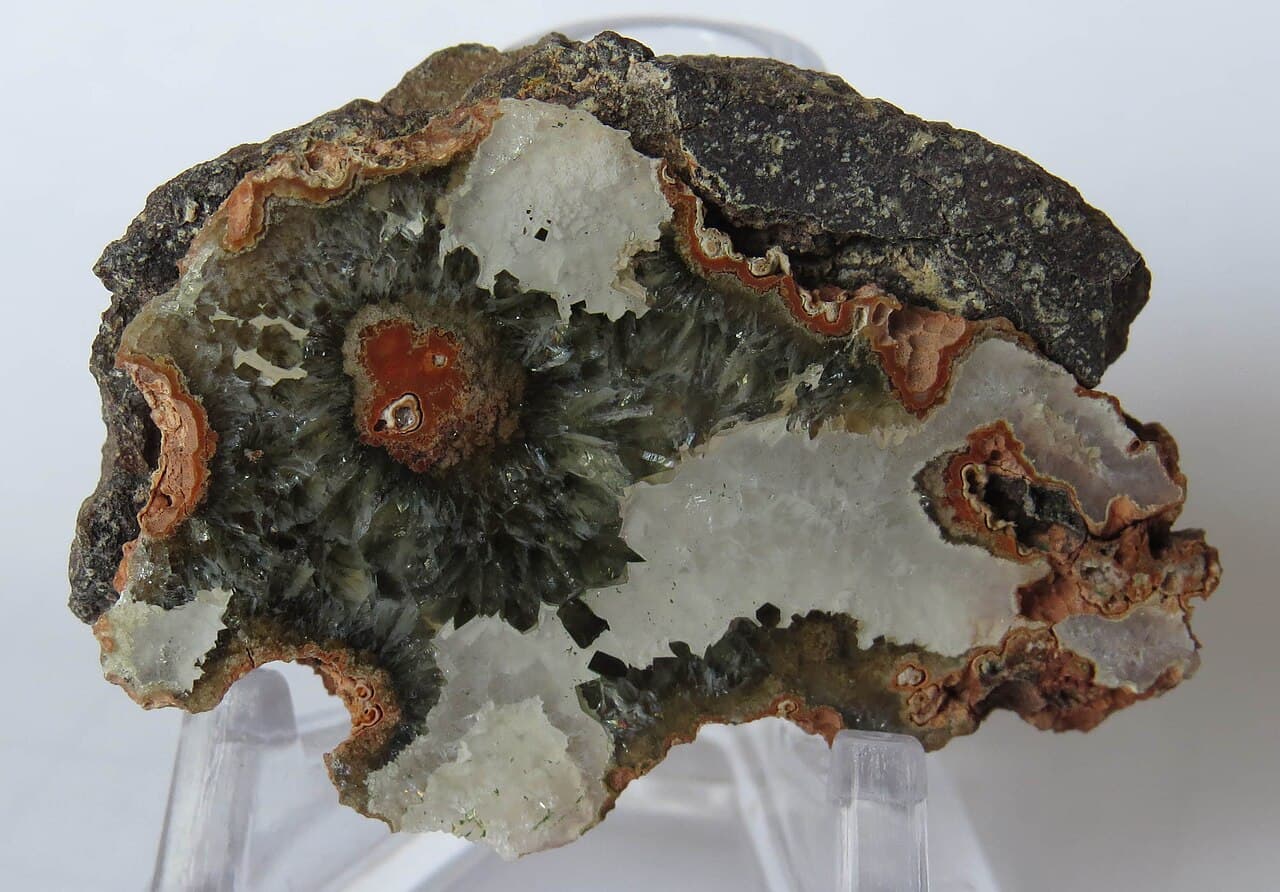
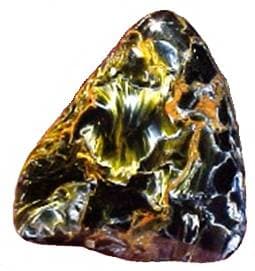
Swirling chatoyant domains distinguish the appearance. Research on Namibia and China shows microstructures and formation histories that should not be reduced to “broken tiger’s eye” in every sample.
R12347 at English Wikipedia · Public domain · Display cropGrape agate ↗
Botryoidal quartz / misleading trade name
Grape-like spheres describe the habit. Material sold under this name may show crystalline quartz surfaces and is not automatically banded chalcedony merely because “agate” appears in its name.
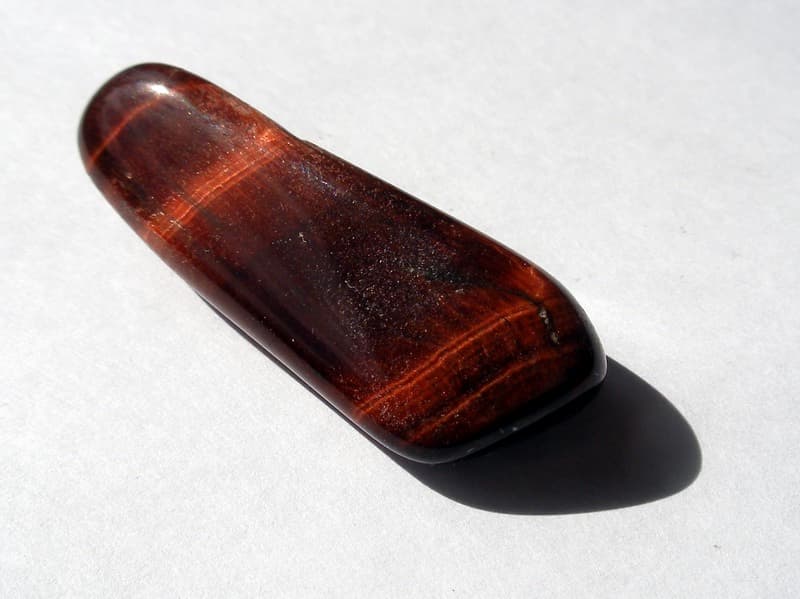
Didier Descouens · CC BY-SA 4.0 · Display cropRed tiger’s eye ↗
Color / treatment trade variety
Red material sold as tiger’s eye may have been heat treated. Color alone does not establish natural color, treatment status or a separate mineral species.
Arenamontanus · CC BY 2.0 · Display cropRed aventurine ↗
Aventurescent quartz-rich aggregate
A red quartz-rich aggregate may sparkle from reflective inclusions. It is different from aventurine feldspar or sunstone; a red glittering glass imitation is another material entirely.
Doobuzz at English Wikipedia · CC BY-SA 3.0 · Display crop
Aventurine parent-material comparison, not a verified red-aventurine specimen.