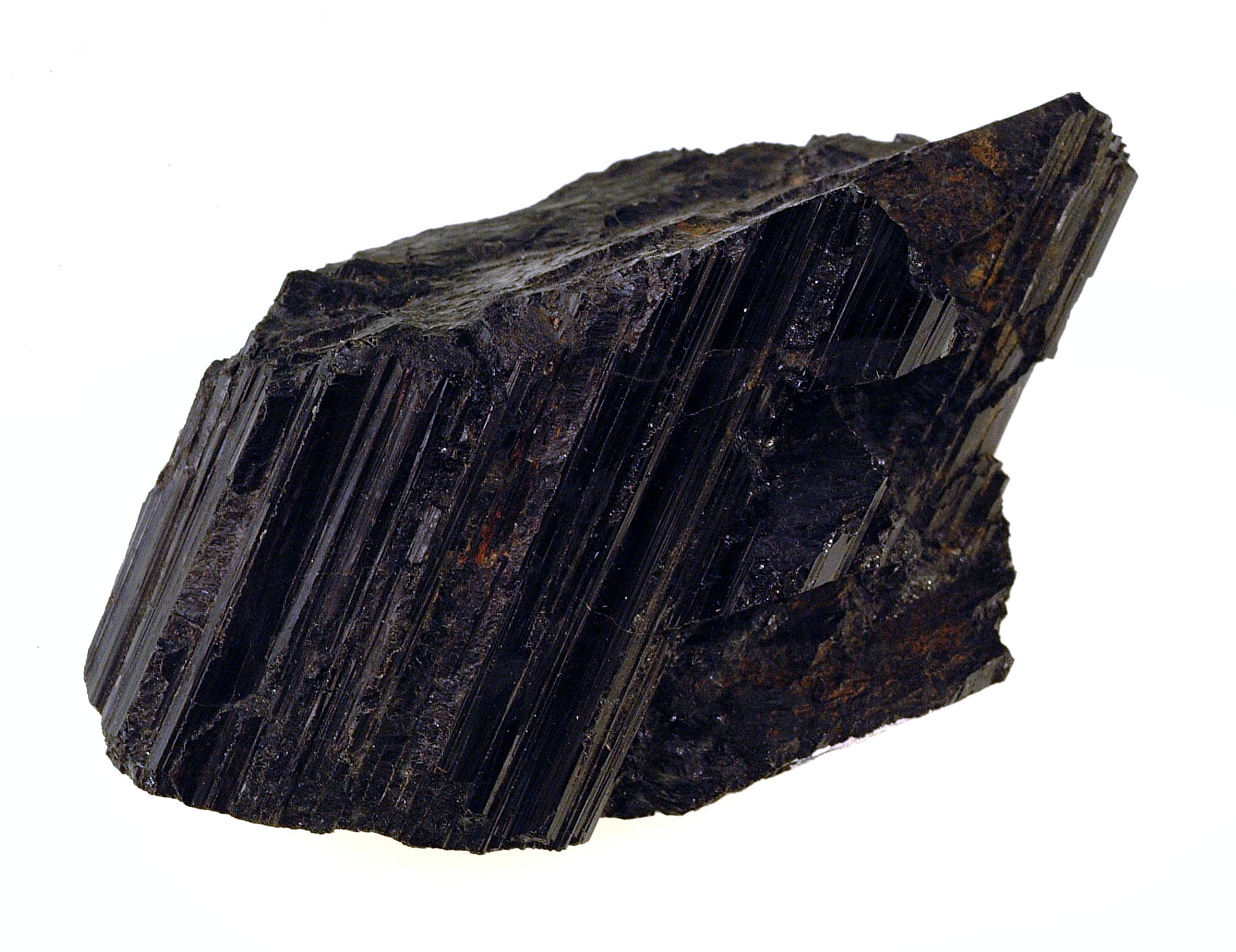
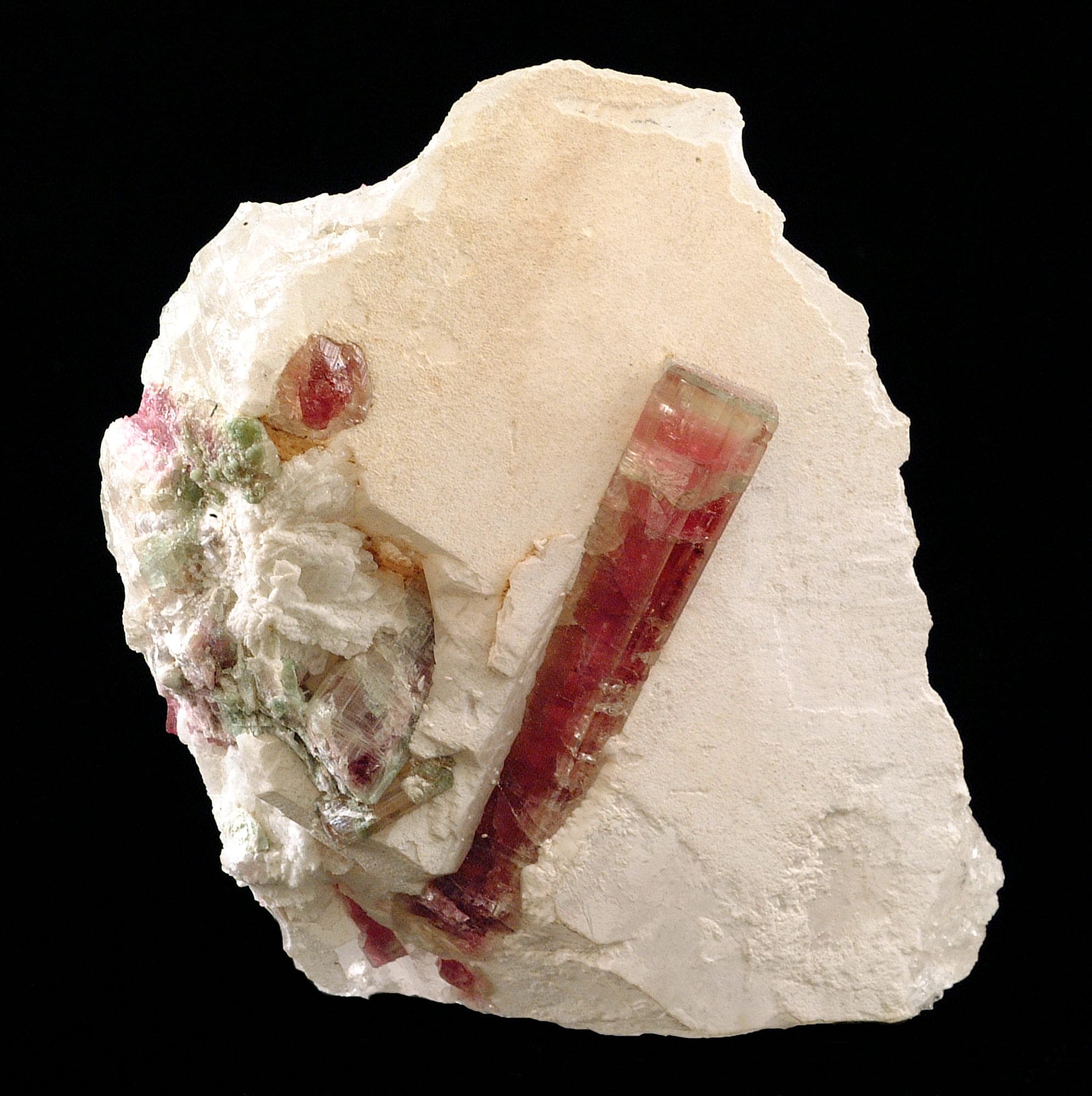
Black tourmaline often shows long, strongly lined crystals. A specimen preserves that growth texture, while a polished bead gives the material a quieter, reflective surface.
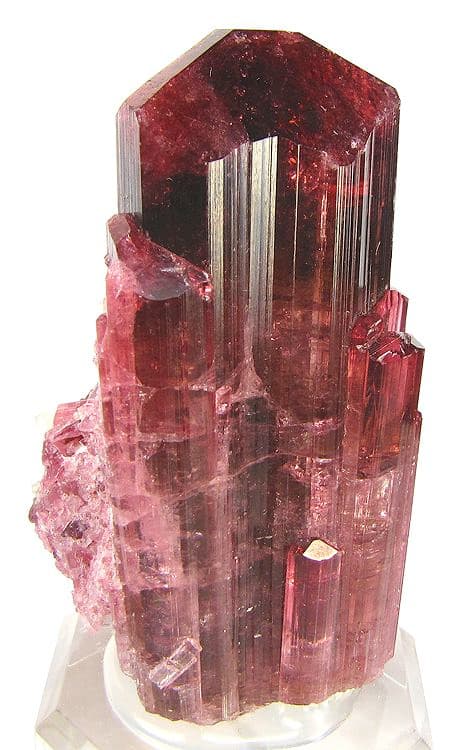
Pink tourmaline brings delicate rose through stronger pink-red tones to beads and cut gems. Natural color variation can remain visible within one crystal.
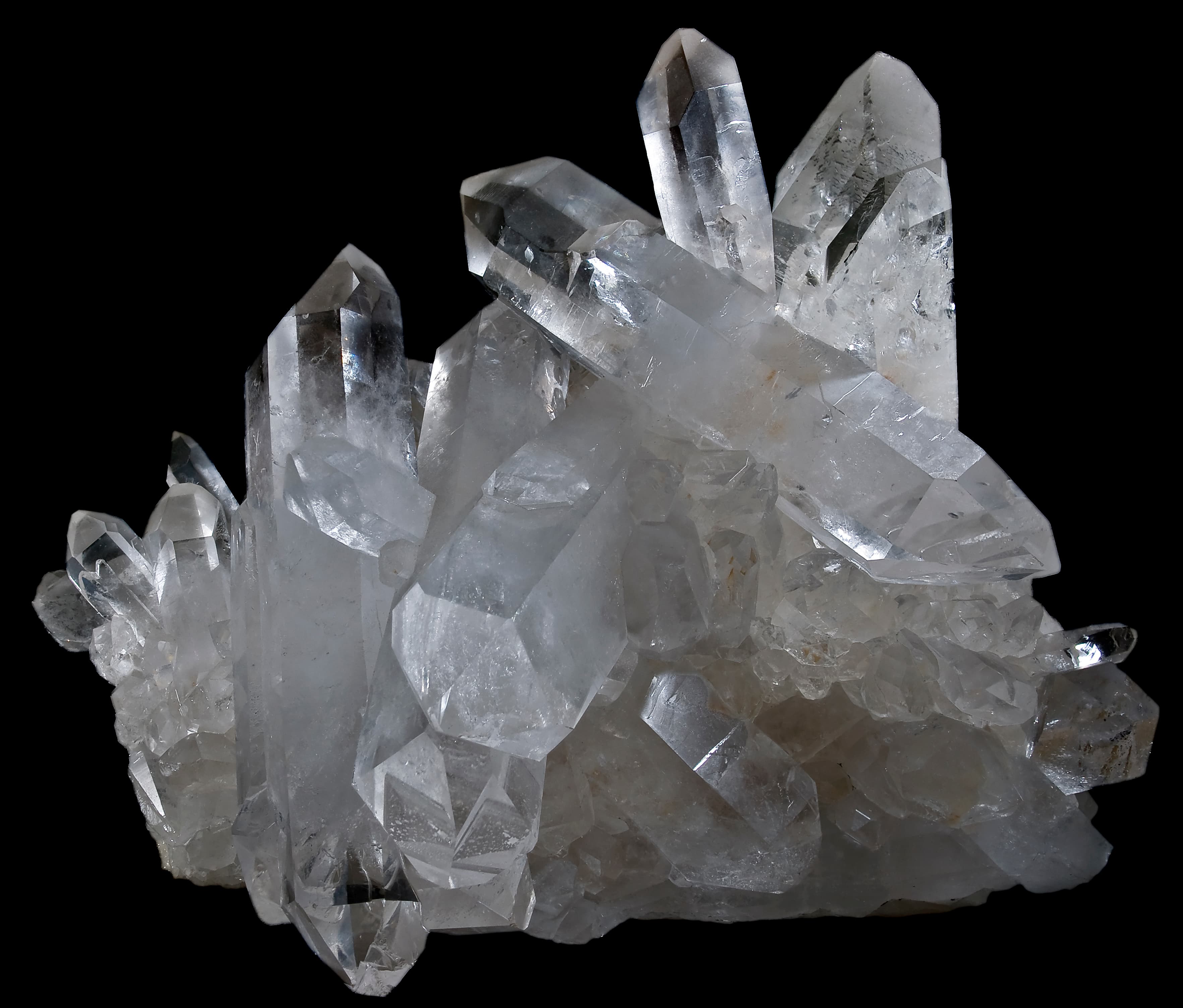
The host is quartz and the dark inclusions are described as tourmaline. Needle shape or black color alone is not enough to identify each inclusion; rutile-bearing quartz is a different description.
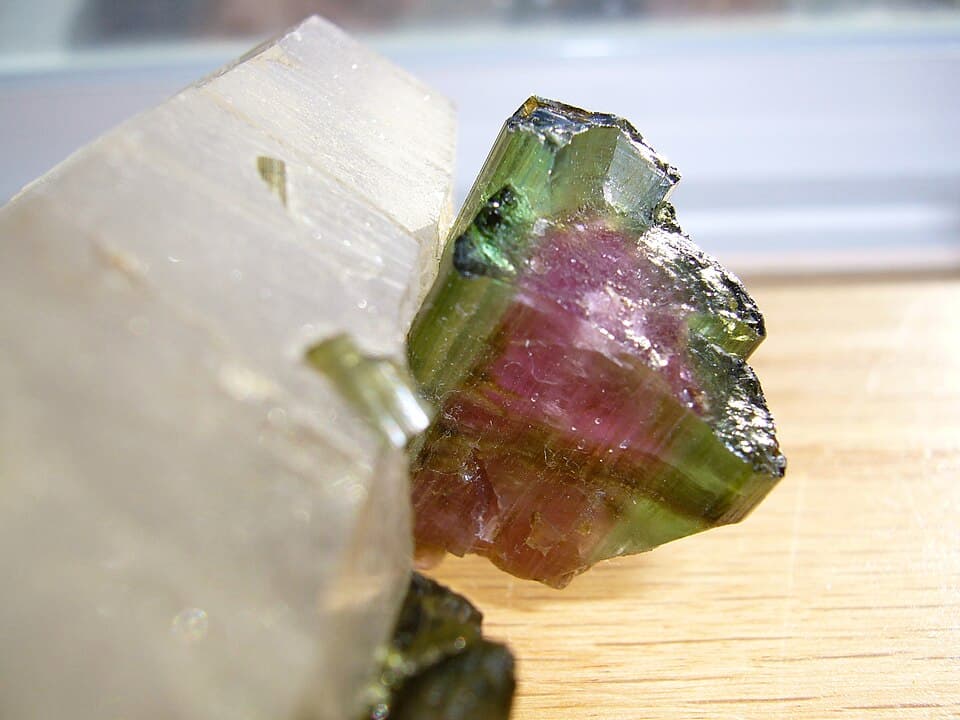
A pink-red interior and green outer region inspire the name. Color zoning does not establish a species or prove a natural untreated origin; elbaite is common but not inferred from color alone.
Rubellite is a red to pink tourmaline color term, not ruby corundum. A vivid trade description should be paired with identification and treatment information.
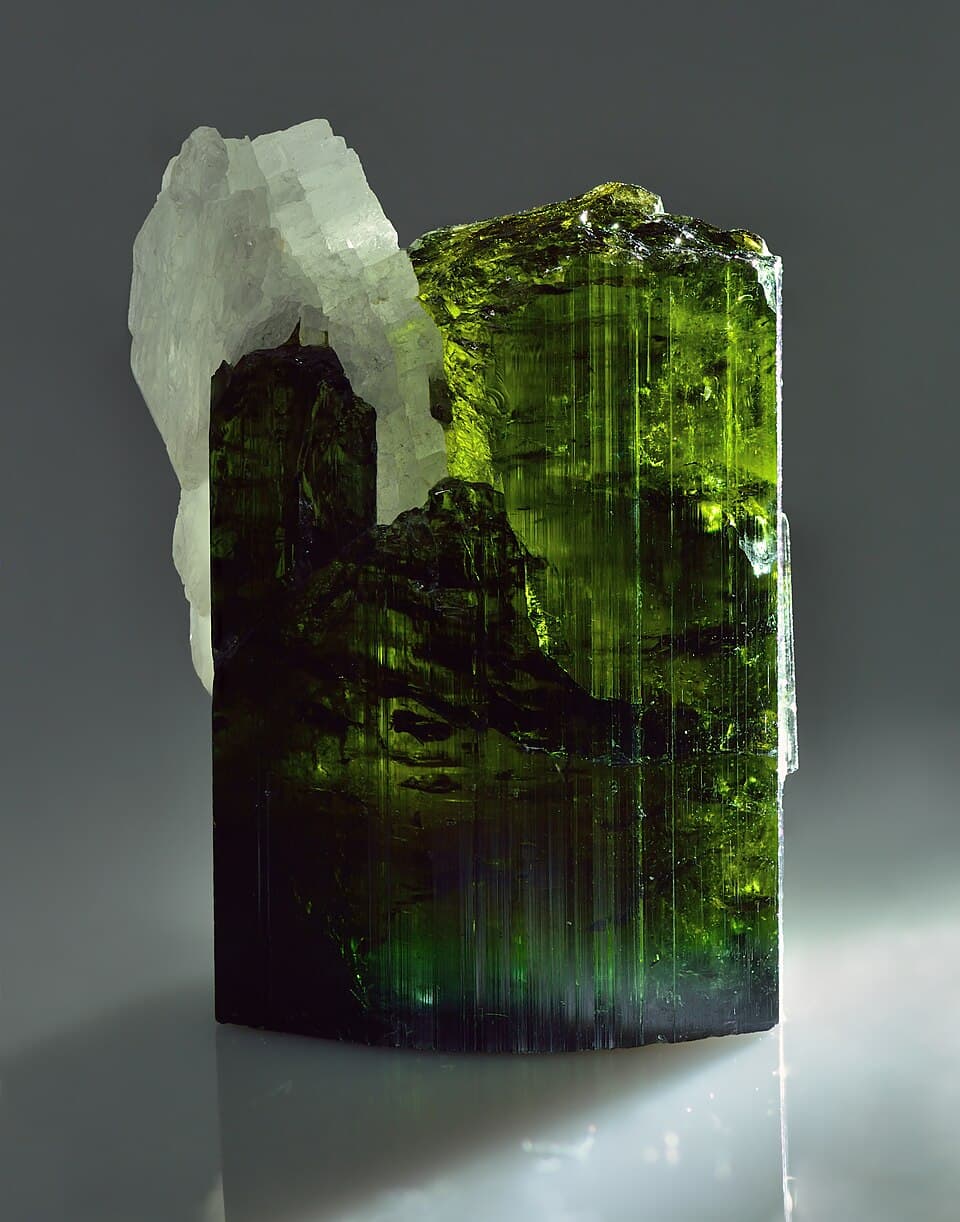
Green tourmaline can involve different compositions. “Verdelite” is a color name, while chromium-bearing material and ordinary green tourmaline require analytical distinctions.
Ivar Leidus · CC BY-SA 4.0 · Display crop Tourmaline-group crystal reference; color does not determine the species.
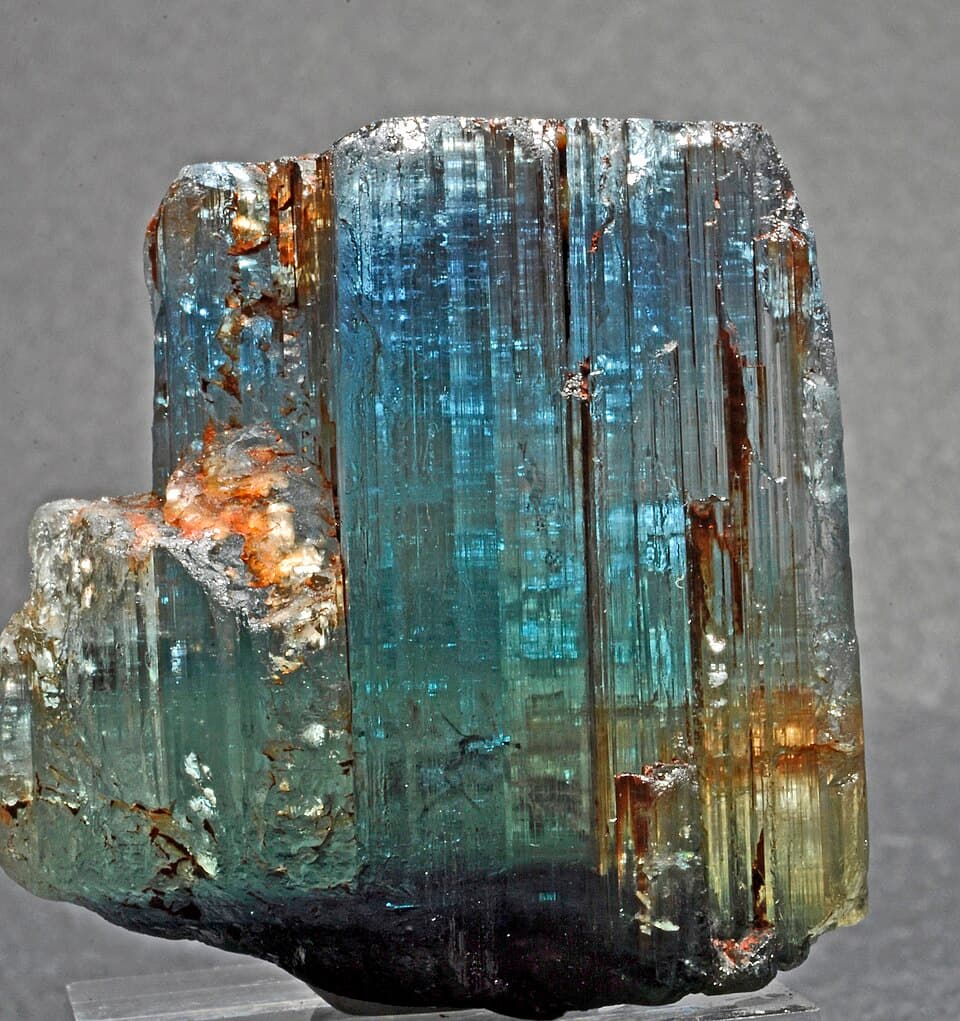
The designation concerns qualifying copper-bearing tourmaline, not merely a bright blue color. It is not a guarantee of Brazilian origin; chemistry, identification and origin are separate report questions.