Celestine ↗
Mineral species
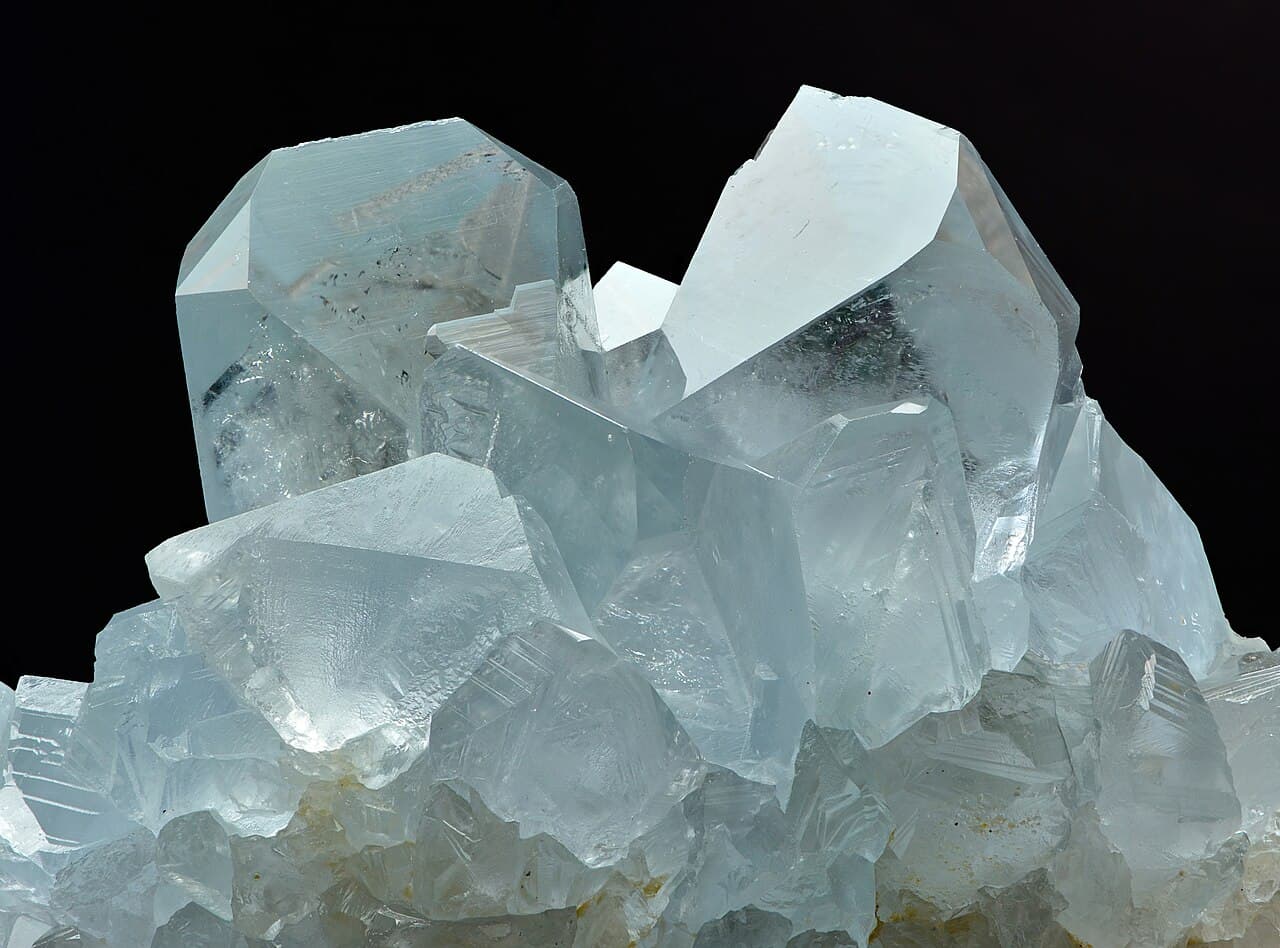
Celestine is often admired as pale blue crystals inside a cavity. Colorless and white material also occurs, so its sky-blue appearance is familiar rather than universal.
Ivar Leidus · CC BY-SA 4.0 · Display cropEditorial material shelf
Sulfate minerals and their varieties.
Keep each chapter’s scientific identity: a family, species, variety, trade label, rock and fossil are different kinds of names.
Mineral species
Celestine is often admired as pale blue crystals inside a cavity. Colorless and white material also occurs, so its sky-blue appearance is familiar rather than universal.
Ivar Leidus · CC BY-SA 4.0 · Display crop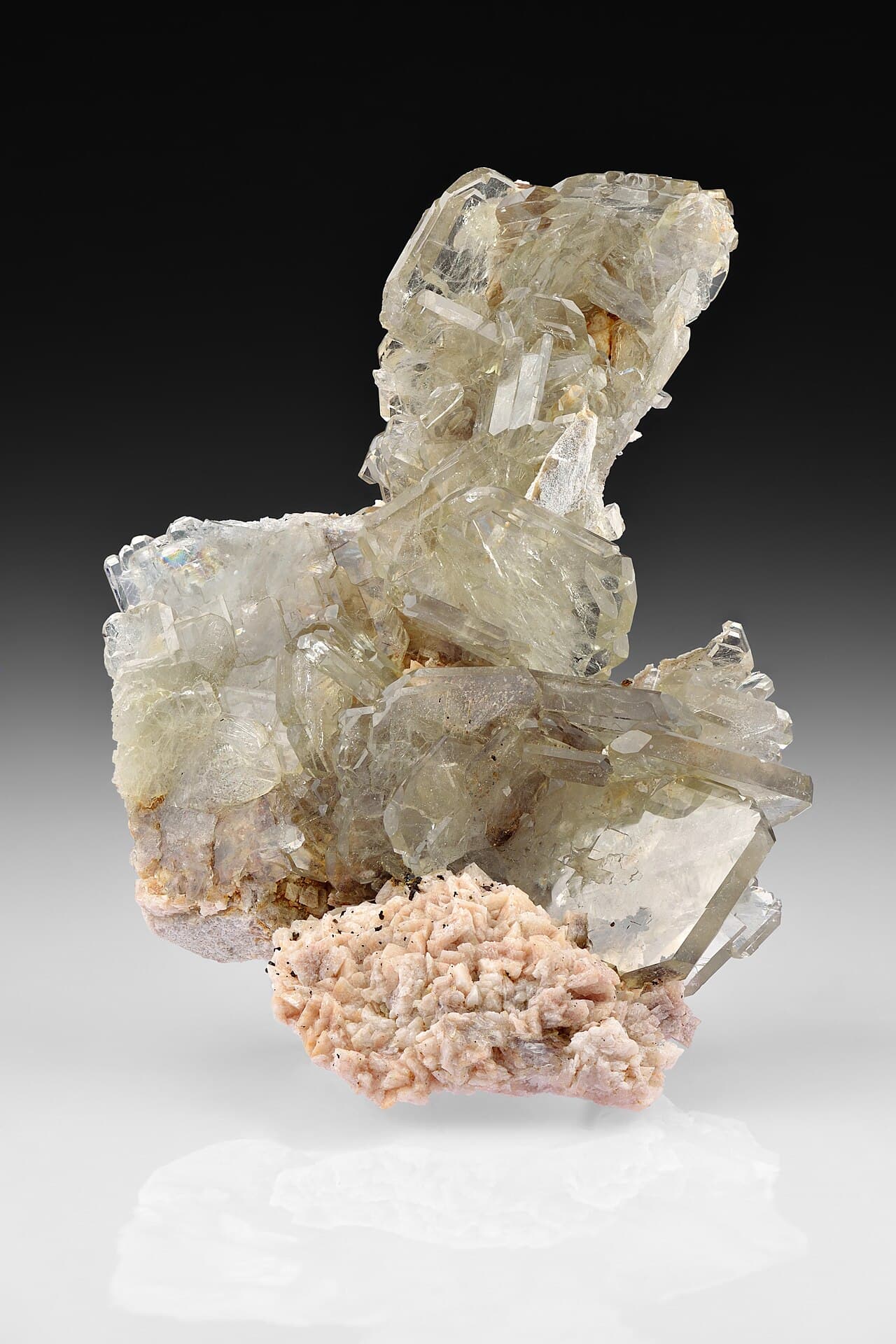
Mineral species
Barite can form plates, bladed groups and attractive clusters in pale or stronger colors. Its relatively high density is a physical property, not a measure of rarity or value.
Ivar Leidus · CC BY-SA 4.0 · Display crop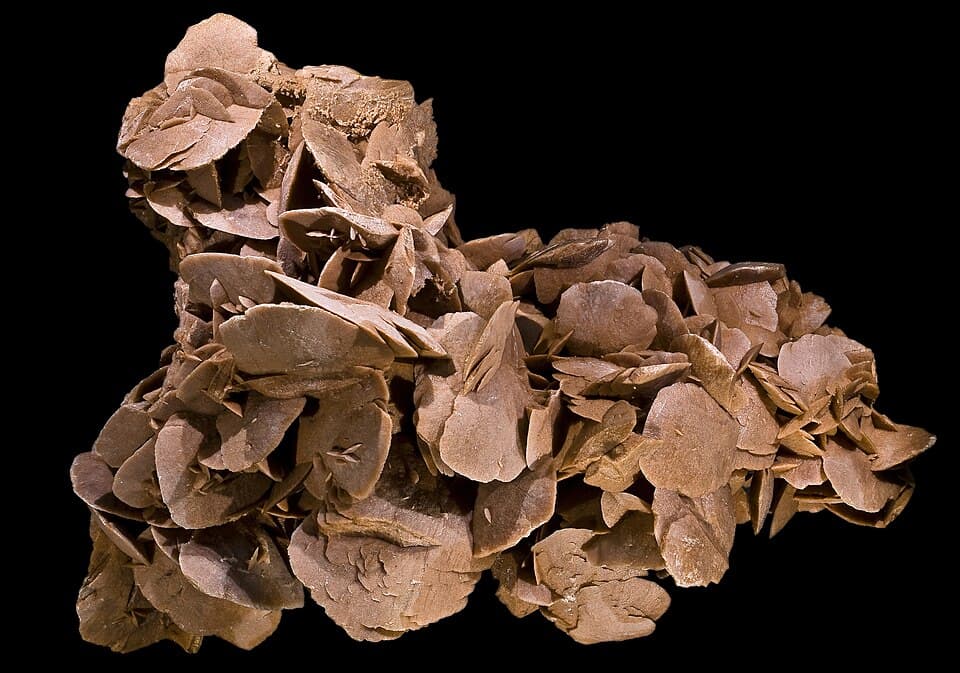
Crystal habit / aggregate
A desert rose is a flower-like aggregate with sand caught among crystal blades. The name describes a formation: gypsum and barite can both produce rose-like specimens.
Didier Descouens · CC BY-SA 4.0 · Display crop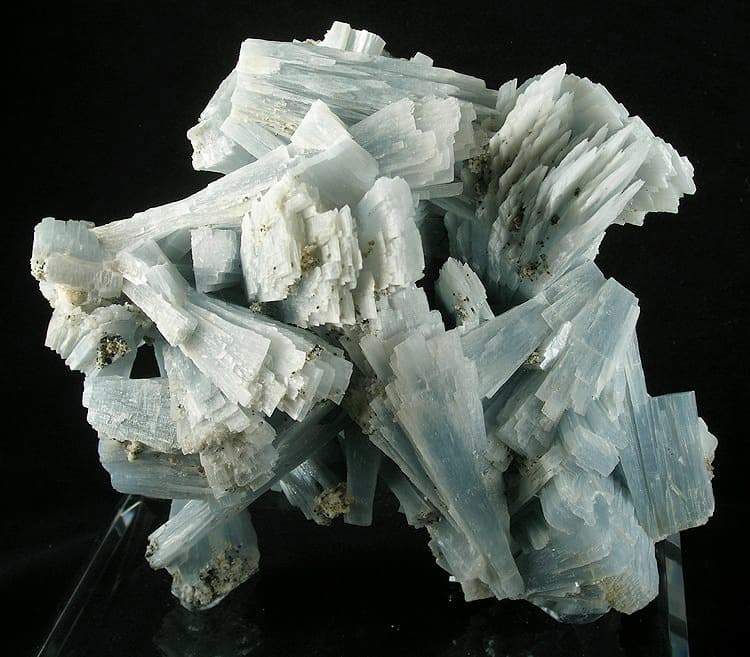
Blue anhydrite / trade name
Angelite refers to blue anhydrite, CaSO₄, not hydrated gypsum CaSO₄·2H₂O. It is a soft collector and occasional lapidary material; keep it dry and do not turn a trade label into a mine-origin claim.
Robert M. Lavinsky · CC BY-SA 3.0 · Display crop