The field library / Collection 08
Bornite.
Copper, iron and a changing surface.
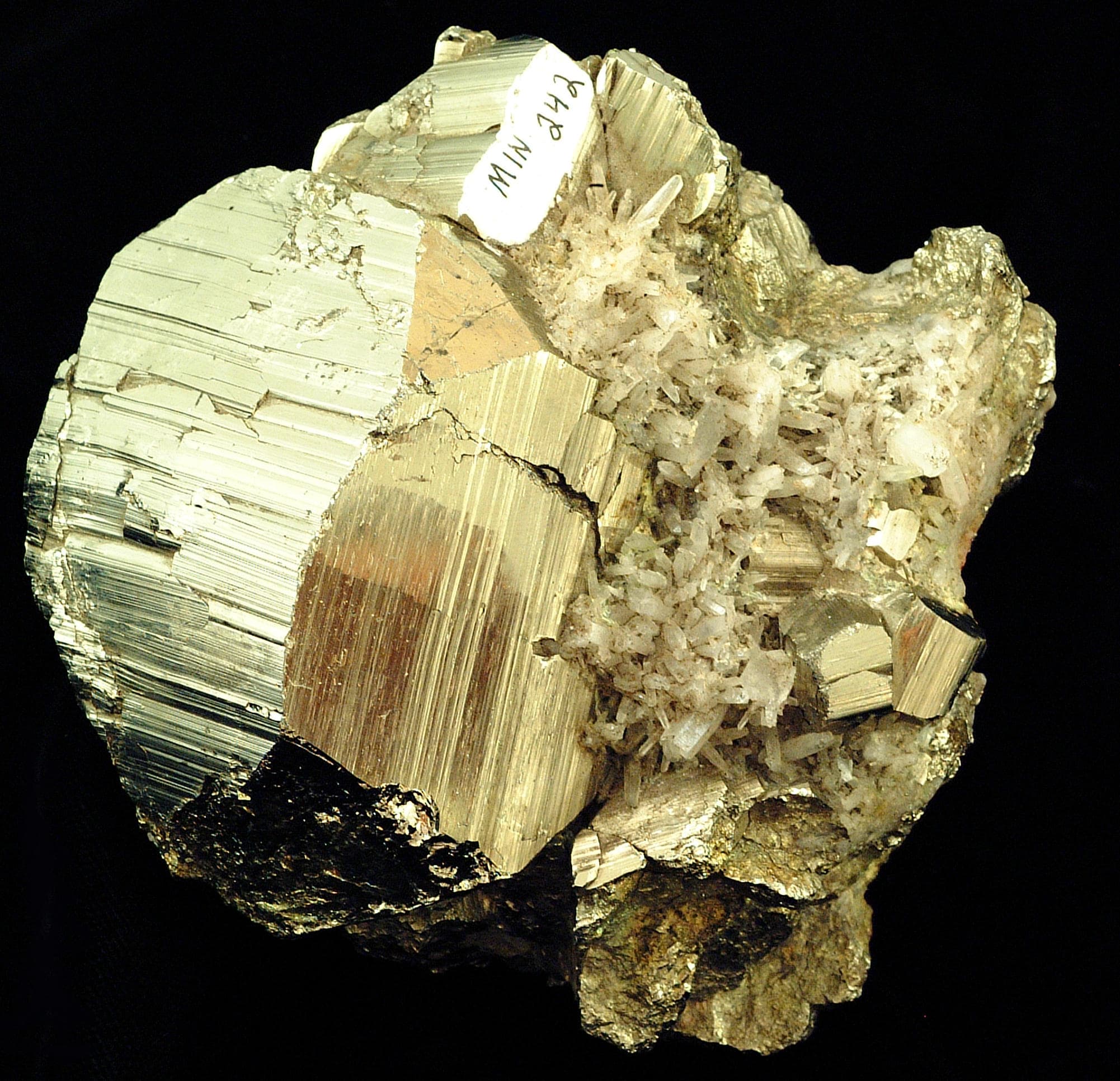
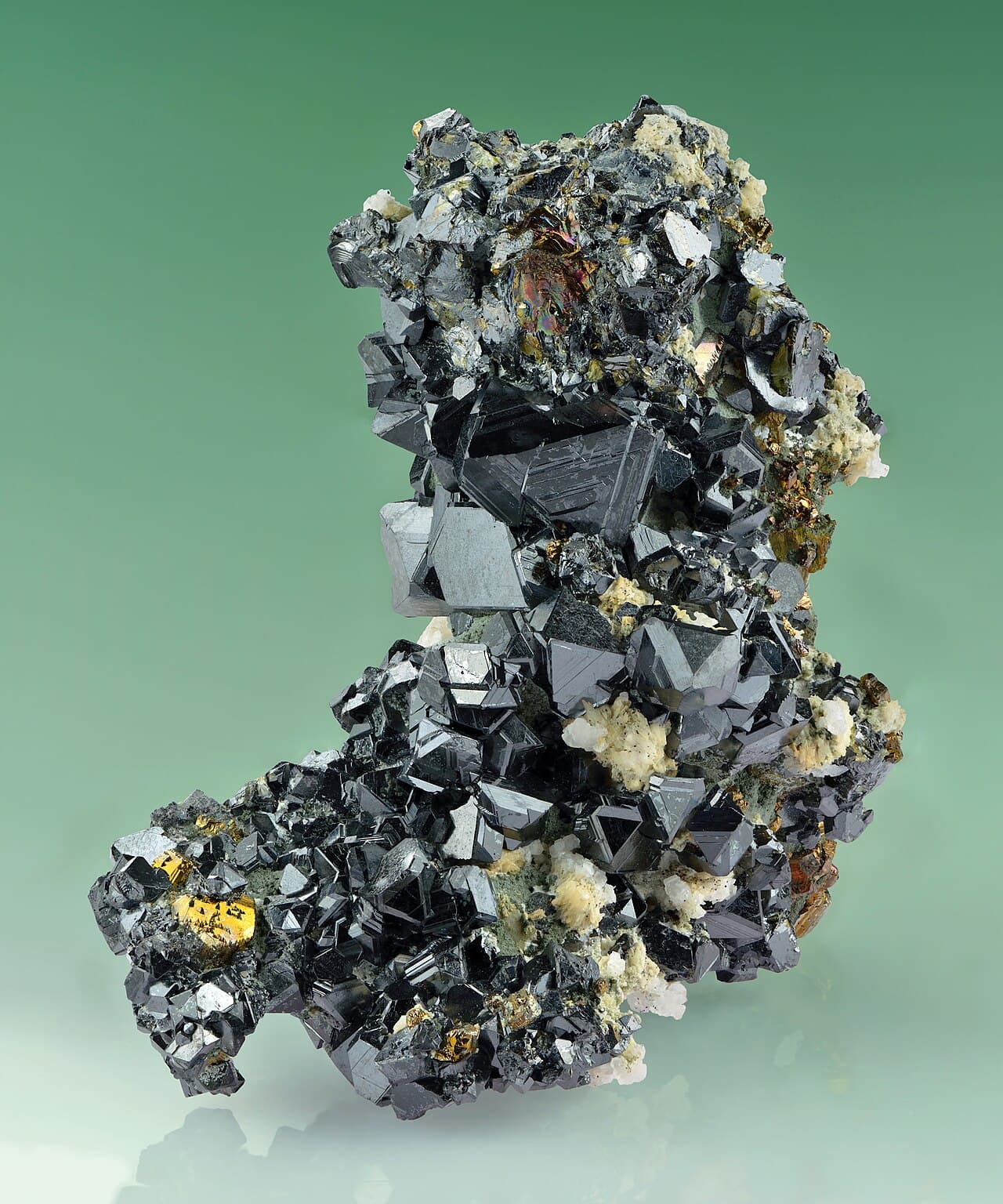
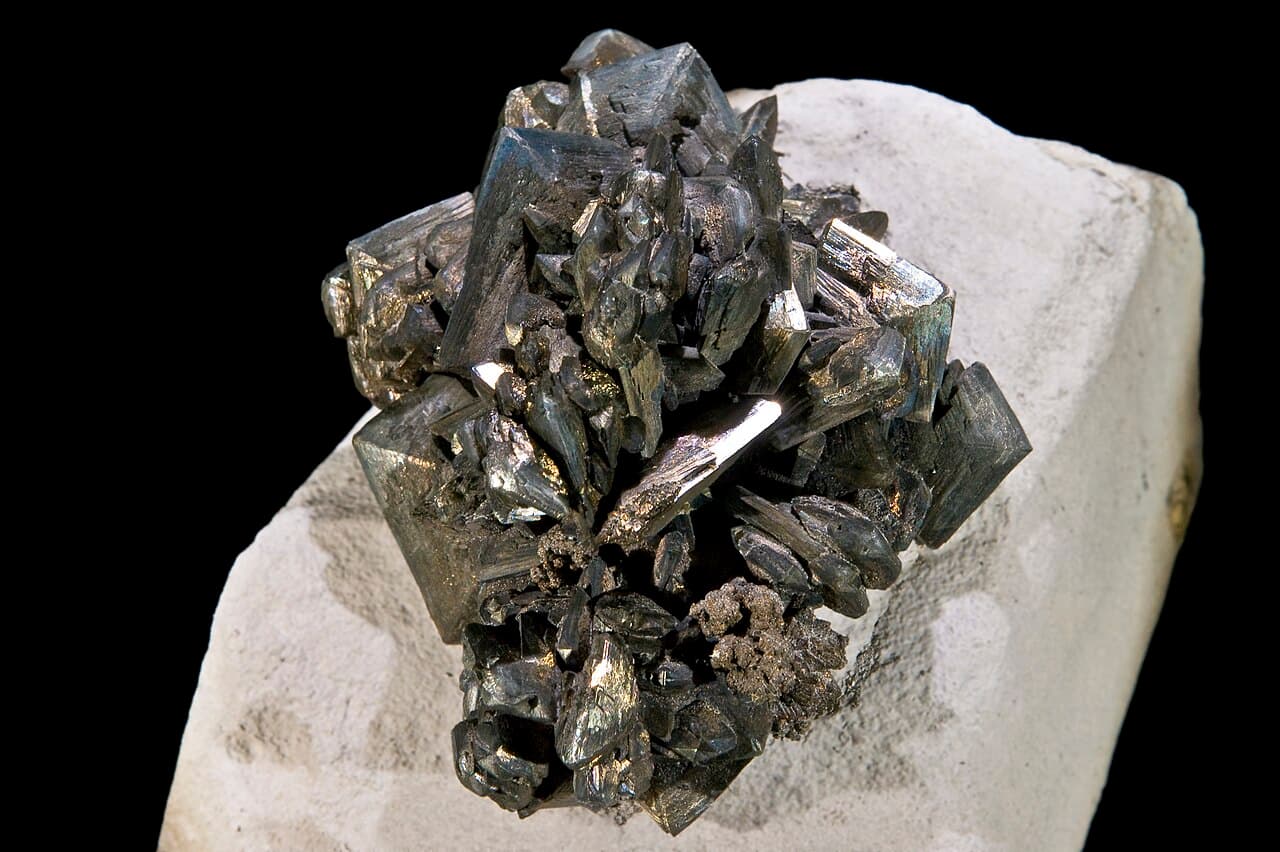
Bornite is a copper–iron sulfide. A fresh surface and a tarnished surface can look very different, which helps explain the colorful “peacock ore” trade name.
Open the collection card ↓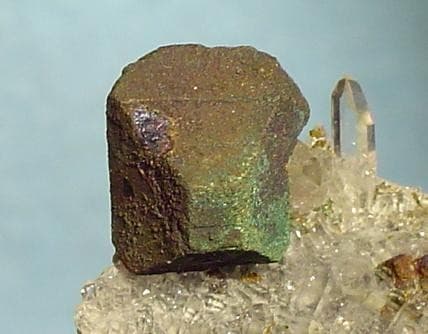
Reference object; not Stone Parade inventory or a product-origin certificate.
01 / The expanded collection card
A name.
A mineral identity.
Bornite is a mineral species; “peacock ore” is not a precise identification. Other copper minerals, including treated chalcopyrite, may be sold under that name. Iridescence alone cannot verify identity or natural color.
MSA Handbook · bornite ↗Specimen identification pending. Educational category verified against references; supplied boxed specimen identification and origin remain unverified.
- Chinese name
- 斑铜矿 彩铜矿 孔雀矿 bornite peacock ore
- Crystal system
- Orthorhombic at room temperature; commonly pseudocubic habit
- Material identity
- Mineral species
- Composition
- Cu₅FeS₄
- Mohs hardness
- 3–3.25
- Luster
- Metallic
Hardness describes scratch resistance, not resistance to breaking. These values follow the cited material references; reported ranges can vary between publications. Inclusions, mixtures and treatments can affect an individual piece.
02 / A moment of observation
Look a little closer.
Fresh versus tarnished
A bronze-brown fresh surface may develop purple-blue iridescent tarnish.
A trade-name trap
“Peacock ore” may describe appearance rather than a confirmed species.
Habit and system
Pseudocubic external shapes do not make room-temperature bornite a cubic mineral.
Observation builds familiarity; it does not replace identification. Avoid scratch, acid or destructive tests on a collection piece.
03 / The geological story
Made by the earth.
Recorded with care.
How it forms
Bornite occurs in several copper-ore environments, including hydrothermal systems. Oxidation and surface changes can alter the appearance after exposure.
MSA Handbook · bornite ↗An example to explore
Documented occurrence / not specimen provenance
The Handbook lists occurrences in Cornwall, England, and Butte, Montana, among many copper districts. No locality or treatment status is assigned to the boxed sample.
MSA Handbook · bornite ↗What does this tell me about my stone?
A recorded occurrence gives geological context. Your Stone Parade piece needs its own batch information before a locality can be stated. Keep an original specimen label or documented supplier record with the collection card.
04 / From a material to an object
Ways to wear.
Ways to keep.
A pause in pictures
From earth to a collection.
A closer look at a documented reference for bornite. Check the caption for the exact material shown.
Reference photographFor careful display. This material is soft, fragile or otherwise poorly suited to ordinary wear. Any jewelry style studies are design possibilities, not wearability recommendations. Natural specimens should be kept for protected display.
Jewelry & practical use
A soft, brittle ore specimen is best kept for display. Colorful jewelry sold as peacock ore needs its own material and treatment disclosure.
One useful distinction
A raw stone describes a finish. A mineral specimen describes an object kept for its features or locality. The terms can overlap, and a specimen does not have to be large.
In Stone Parade, the mineral selection may be a raw stone or a collector-sized mineral specimen.
05 / A little thoughtful care
Keep the beauty.
Keep the story.
Choose a method for the whole object: stone, matrix, cord, metal and any treatment. A care shortcut that suits one material can damage another.
Keep dry
Limit moisture and avoid immersion of sulfide specimens.
Keep the surface
Do not polish, acid-clean or strip an iridescent layer.
Handle thoughtfully
Avoid producing dust, wash hands after handling and keep away from food.
Before you collect / treatments, names & provenance +
Ask for species identification and any color treatment. Do not infer an untreated natural surface from rainbow colors or the trade name.
Personal symbolism is individual. The crystal-culture section explores symbolism separately from the mineral science and care references.
Another way to connect / Crystal culture
Meaning, energy
& personal ritual.
Alongside its geological story, bornite can become a personal symbol. Explore healing traditions and chakra language as cultural beliefs and reflection prompts.
Symbolic associations, not established medical effects. Crystals have not been shown to treat illness or balance a measurable human energy field.
No stone-to-chakra correspondence is assigned for this reference chapter. A label or metallic appearance does not establish a spiritual property.
Your reflection themes
Stone Parade editorial pairings for this chapter’s color or featured variety. Interpretations differ among authors and practitioners.
Notice one detail in the material and write down what you can observe, separately from what you believe. Keep delicate stones safely on a surface; no water, salt or heating is needed.
Healing, energy & the sources behind this section +
In contemporary crystal practice, “healing” and “energy” often describe beliefs about subtle energies, intention and personal experience. Such language is different from measured mineral properties or demonstrated treatment effects. This section offers optional symbolism and does not replace healthcare.
The museum sources document beliefs and objects, not clinical efficacy. In a 2025 controlled study of rose quartz and a matched placebo, anxiety changes did not show a crystal-specific benefit beyond placebo. That study does not test every stone or every practice.
Our tags are transparent editorial reflection pairings, informed by the contemporary color-based approach; these sources do not validate every stone-to-chakra correspondence. Mineral science references remain in the chapter’s own research section.
06 / Follow the research
Curiosity, with
something to follow.
Care references & editorial notes +
Care suggestions combine the specific sources above with GIA’s jewelry care guidance. Recommendations are deliberately conservative when a piece’s treatment or matrix is unknown. IMA-CNMNC and RRUFF provide further nomenclature and analytical research; listing them does not imply laboratory testing of a Stone Parade item. Some older Handbook entries preserve historical names; chapter-specific modern nomenclature references take precedence where noted.
Reference properties and locality examples reviewed October 30, 2026. Photographs show particular objects. Jewelry style studies show possibilities, not an inventory promise.
Keep your curiosity going